
Introduction
Three weeks ago, a frantic son called me from Jinnah Hospital’s emergency room. His 72-year-old father had just been admitted with severe pneumonia—high fever, labored breathing, and oxygen saturation dropping to 88%. After five days of IV antibiotics and oxygen therapy, the doctors said he was stable enough to go home.
“But he’s still so weak,” the son told me, voice shaking. “He can barely walk to the bathroom. He’s coughing constantly. The hospital says he’s ‘medically stable’ but he doesn’t look recovered at all. How am I supposed to take care of him at home?”
This is the reality thousands of Karachi families face every year. Pneumonia—an infection that inflames the air sacs in one or both lungs—is one of the leading causes of hospitalization in elderly Pakistanis. And while hospitals can treat the acute infection, the real recovery happens at home over weeks and sometimes months.
What most families don’t realize is that the hospital discharge is just the beginning. Your loved one might be “out of danger,” but they’re far from recovered. Lingering weakness, persistent cough, breathing difficulties, and the very real risk of relapse mean that home care during pneumonia recovery is absolutely critical.
In this comprehensive guide, I’ll walk you through everything Karachi families need to know about pneumonia recovery at home—from understanding what’s happening in those healing lungs to managing breathing exercises, nutrition, preventing relapse, and most importantly, knowing when recovery isn’t going as planned and you need urgent medical help.
Medical Disclaimer: This guide is for educational purposes based on clinical experience. Always follow your doctor’s specific discharge instructions. This is not a substitute for professional medical advice.
1. Understanding Pneumonia and What Recovery Really Means
What is Pneumonia?
Pneumonia is an infection that inflames the air sacs (alveoli) in your lungs. These tiny sacs fill with fluid or pus, making it difficult to breathe and reducing oxygen transfer to your blood.
Common causes:
- Bacteria (most common: Streptococcus pneumoniae, Haemophilus influenzae)
- Viruses (influenza, COVID-19, RSV)
- Fungi (rare, usually in immunocompromised patients)
- Aspiration (food, liquid, or vomit entering lungs—common in stroke patients)
In Pakistan, especially in Karachi’s polluted environment, pneumonia is particularly common in:
- Elderly (65+ years)
- Smokers
- People with chronic diseases (diabetes, COPD, heart disease)
- Post-flu or COVID complications
- Bedridden patients
For elderly patients who already have breathing issues, understanding “chronic chest infections“ helps prevent pneumonia progression.
Why Recovery Takes So Long
Here’s what surprises most families: the infection might be gone in 5-7 days with antibiotics, but lung healing takes 4-8 weeks.
What’s happening during recovery:
Week 1-2 (Post-Hospital)
- Inflammation still present
- Mucus production high (body clearing infection debris)
- Lung capacity reduced (oxygen levels may still be low)
- Extreme fatigue (body using all energy to heal)
- Persistent cough (productive—bringing up phlegm)
Week 3-4
- Inflammation reducing
- Breathing slightly easier
- Energy slowly returning
- Cough becoming less frequent
- Appetite improving
Week 5-8
- Lungs mostly healed
- Stamina rebuilding
- Cough minimal or dry
- Near-normal activities possible
For elderly patients, recovery can take 10-12 weeks.
Different Types of Pneumonia (Recovery Varies)
Community-Acquired Pneumonia (CAP)
- Caught outside hospital
- Most common type
- Typically responds well to antibiotics
- Recovery: 3-6 weeks
Hospital-Acquired Pneumonia (HAP)
- Develops 48+ hours after hospital admission
- Often more resistant bacteria
- Recovery: 6-8 weeks, sometimes longer
Aspiration Pneumonia
- Caused by inhaling food/liquid
- Common in stroke, dementia, or swallowing disorder patients
- Prevention crucial (proper feeding techniques)
For patients recovering from stroke, proper feeding is critical. Read our “Ryles tube feeding guide“ to prevent aspiration.
Bilateral Pneumonia (Both Lungs)
- More severe
- Longer recovery (8-12 weeks)
- Higher relapse risk
Learn more from “WHO pneumonia fact sheet“
2. Post-Hospital Discharge: First 48 Hours at Home
The transition from hospital to home is critical. Here’s your action plan:
Before Leaving Hospital (Checklist)
✅ Get clear discharge instructions:
- Medication list with dosages and duration
- Follow-up appointment date (typically 7-10 days)
- Warning signs to watch for
- Activity restrictions
- Diet recommendations
✅ Understand oxygen needs:
- Does patient need home oxygen?
- What flow rate? (e.g., 2 liters/min)
- Continuous or as needed?
- Oxygen concentrator or cylinder?
If home oxygen prescribed, understanding “oxygen concentrator vs cylinder“ helps you make the right choice.
✅ Collect all test reports:
- Chest X-ray
- Blood work
- Sputum culture (if done)
✅ Ask about:
- When to resume normal activities
- Driving restrictions
- Infection control at home
- Visitors (should they avoid for a few weeks?)
Setting Up Home for Recovery
Bedroom Setup:
✅ Elevate head of bed (30-45 degrees)
- Use extra pillows or adjustable bed
- Helps breathing, reduces fluid accumulation
- Prevents aspiration if coughing at night
✅ Keep essentials within reach:
- Water bottle
- Tissues
- Trash bin (for used tissues)
- Bell or phone to call for help
- Medications
✅ Good ventilation:
- Fresh air circulation (open window slightly if weather permits)
- BUT avoid direct cold drafts
- Use air purifier if available (Karachi’s air quality poor)
✅ Humidifier (if air dry):
- Helps loosen mucus
- Easier breathing
- Especially useful in Karachi’s dry winter months
Safety Measures:
✅ Fall prevention:
- Clear walking paths
- Night lights
- Non-slip mats in bathroom
- Walker or cane if patient weak
For comprehensive fall prevention, see our “buzurg ko girne se bachane guide“
✅ Infection control:
- Separate towels, utensils
- Frequent hand washing
- Dispose of used tissues immediately
- Masks for caregivers if patient still coughing heavily
First 48 Hours Monitoring
Check these DAILY (keep a log):
📊 Vital Signs:
- Temperature (4 times daily for first week)
- Respiratory rate (normal: 12-20 breaths/min)
- Oxygen saturation if pulse oximeter available (target: >92%)
- Heart rate
📊 Symptoms:
- Cough frequency (increasing or decreasing?)
- Phlegm color (clear/white = good, green/yellow = infection, blood = urgent)
- Breathing difficulty (improving or worsening?)
- Chest pain (sharp pain = concern)
- Appetite and fluid intake
- Urine output (should pass urine every 4-6 hours)
📊 Energy levels:
- Can they walk to bathroom?
- Do they need help with basic tasks?
- Are they sleeping well?
💡 Just Discharged from Hospital After Pneumonia?
Professional post-hospital recovery support at home:
✓ Daily nurse visits for vital signs monitoring
✓ Oxygen therapy management
✓ Breathing exercise training
✓ Medication management
✓ Early warning sign detection
✓ Doctor consultations at home
📞 Call Now: +92 300 9263225 | WhatsApp:+92 300 9263225
3. Medication Management During Recovery
Common Post-Pneumonia Medications
1. Antibiotics (If Bacterial Pneumonia)
Typical duration: 7-14 days (sometimes longer for severe cases)
Common antibiotics in Pakistan:
- Augmentin (Co-amoxiclav): 625mg or 1g, twice daily
- Azithromycin: 500mg once daily for 5 days
- Levofloxacin: 500mg once daily
- Ceftriaxone (injectable): Usually given in hospital, sometimes continued at home
CRITICAL RULES:
✅ Complete the full course even if feeling better
✅ Take at same time daily (set alarms)
✅ With or without food (follow label instructions)
✅ Never skip doses (reduces effectiveness)
✅ Watch for side effects:
- Diarrhea (common—take probiotics)
- Nausea (take with food if allowed)
- Rash (allergic reaction—call doctor immediately)
Cost in Karachi:
- Augmentin 625mg (14 tablets): Rs. 300-500
- Azithromycin (5 tablets): Rs. 250-400
- Levofloxacin (10 tablets): Rs. 800-1,200
2. Cough Medications
Two types:
Expectorants (help bring mucus up):
- Mucinex, Guaifenesin
- ENCOURAGED in pneumonia recovery (want to clear lungs)
Cough Suppressants (stop cough reflex):
- Codeine-based syrups
- Generally AVOID unless dry irritating cough preventing sleep
- Reason: You WANT productive cough to clear infection debris
Doctor will advise which type you need.
3. Fever/Pain Relief
- Paracetamol (Panadol): 500-1000mg every 6-8 hours as needed
- Safe, reduces fever and discomfort
- Don’t exceed 4g (8 tablets of 500mg) per day
4. Bronchodilators (If Wheezing)
- Salbutamol inhaler (Ventolin)
- Opens airways
- Usually temporary during recovery
Understanding proper “nebulizer use guide“ is helpful if breathing treatments prescribed.
5. Oxygen Therapy (If Prescribed)
Home oxygen details:
- Flow rate (e.g., 2 liters/minute)
- Continuous or PRN (as needed, like during activity or sleep)
- Nasal cannula or mask
- Safety: Keep away from open flames, smoking
Monitoring:
- Use pulse oximeter to check oxygen saturation
- Target: >92% (>88% for COPD patients)
- If drops below target despite oxygen → call doctor
Medication Schedule Template
| Time | Medication | Dose | With/Without Food |
|---|---|---|---|
| 8 AM | Augmentin | 1g | With breakfast |
| 8 AM | Paracetamol | 500mg | If fever >100°F |
| 2 PM | Augmentin | 1g | With lunch |
| 8 PM | (Same as morning) |
Tip: Use phone alarms or pill organizer boxes.
For comprehensive medication management in elderly, see our medication organization guide – Coming soon
4. Breathing Exercises and Lung Rehabilitation
This is THE most important part of home recovery. Weak, unused lungs = higher relapse risk.
Why Breathing Exercises Matter
After pneumonia:
- Lung capacity reduced
- Mucus still present in small airways
- Risk of lung collapse in unused areas (atelectasis)
- Weak respiratory muscles
Goal: Re-expand lungs, strengthen muscles, clear secretions.
Essential Breathing Exercises (Do 3-4 Times Daily)
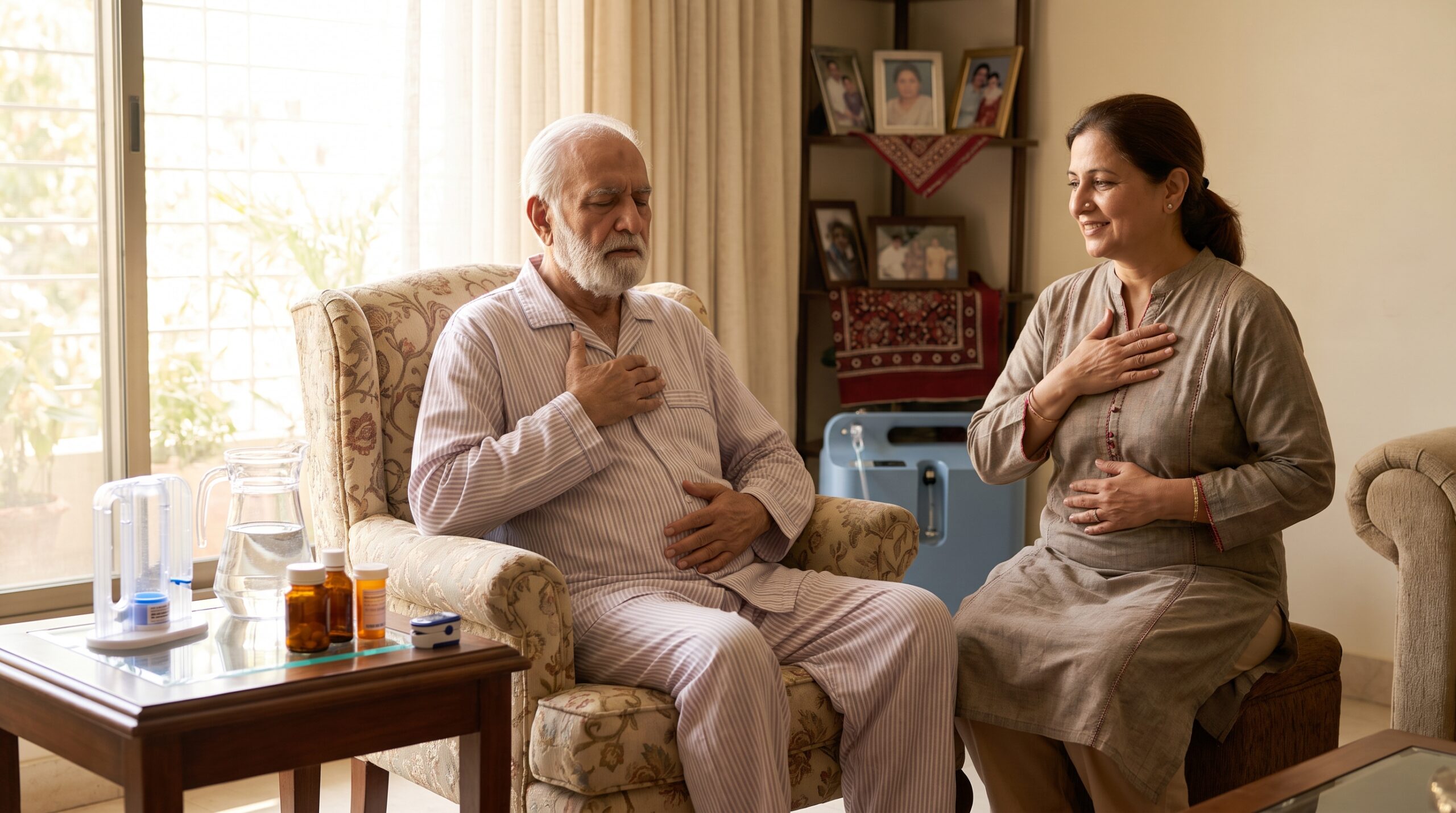
1. Deep Breathing Exercise
How to do:
- Sit upright in chair or bed (back supported)
- Place one hand on chest, one on belly
- Breathe in slowly through nose (count to 4)
- Feel belly expand (not just chest)
- Hold breath for 2 seconds
- Exhale slowly through mouth (count to 6)
- Repeat 10 times
Benefits: Re-expands collapsed lung areas, increases oxygen intake
When: Morning, afternoon, evening, before bed
2. Incentive Spirometry
What it is: A plastic device with a ball or piston that rises when you breathe in deeply.
How to use:
- Sit upright
- Place mouthpiece in mouth, seal lips
- Breathe in slowly and deeply
- Try to raise the ball/piston to target line
- Hold breath 3-5 seconds
- Exhale normally
- Repeat 10 times every hour while awake
Where to buy in Karachi:
- Medical equipment stores (Saddar, Tariq Road)
- Online: Daraz, medical supply sites
- Cost: Rs. 800-1,500
Why it’s important: Hospital often provides one, but many families don’t use it properly. It’s NOT a toy—it’s medicine.
3. Pursed Lip Breathing
How to do:
- Breathe in through nose (2 counts)
- Purse lips like blowing out a candle
- Breathe out slowly through pursed lips (4 counts)
- Repeat 5-10 times
Benefits: Keeps airways open longer, removes trapped air, reduces shortness of breath
When: Anytime feeling breathless, before walking, during activities
4. Huffing/Controlled Coughing
Purpose: Clear mucus effectively without exhausting yourself
How to do:
- Sit upright
- Take a deep breath
- Hold 2-3 seconds
- Force air out quickly saying “huff, huff” (like fogging a mirror)
- This brings mucus up
- Then take another breath and cough to expel mucus
- Rest, repeat 2-3 times
Better than: Violent uncontrolled coughing that exhausts patient
Gradual Physical Activity
Week 1-2 (Post-Hospital):
- Walk to bathroom and back
- Sit in chair for meals (don’t stay in bed 24/7)
- 5-minute slow walks inside home (2-3 times daily)
Week 3-4:
- 10-minute walks inside or outside (flat surface)
- Light stretching
- Sitting outside in fresh air (avoid pollution peak hours in Karachi)
Week 5-6:
- 15-20 minute walks
- Light household tasks (folding clothes, not heavy lifting)
- Stairs (slowly, with support)
Week 7-8:
- 30-minute walks
- Resume most normal activities
- Avoid heavy exercise/gym for 3 months
Red flags during activity (STOP and rest):
- Severe shortness of breath
- Chest pain
- Dizziness
- Oxygen saturation drops below 90%
For elderly patients, proper “physiotherapy at home“ can accelerate recovery safely.
5. Nutrition for Lung Healing
Proper nutrition is critical but often overlooked.
Why Nutrition Matters in Pneumonia Recovery
- Infection depletes body reserves (protein, vitamins, minerals)
- Healing requires building blocks (amino acids for tissue repair)
- Immune system needs fuel (to prevent relapse)
- Energy needed (breathing takes 10x more effort when lungs damaged)
High-Priority Nutrients
1. Protein (Most Important)
Why: Repairs damaged lung tissue, builds antibodies
Sources:
- Eggs (2-3 daily if no cholesterol issues)
- Chicken breast
- Fish (especially omega-3 rich: salmon if affordable, otherwise rohu, pomfret)
- Lentils (daal—moong, masoor, chana)
- Yogurt (Greek yogurt if available)
- Milk
- Nuts (almonds, walnuts—handful daily)
Target: 1-1.5g protein per kg body weight
- Example: 60kg person = 60-90g protein daily
- 1 egg = 6g, 100g chicken = 30g, 1 cup daal = 15g
2. Vitamin C (Immune Booster)
Sources:
- Oranges (mosambi, kino)
- Guava (amrood—very high vitamin C)
- Papaya
- Strawberries (seasonal)
- Bell peppers
- Amla (Indian gooseberry—highest source)
Target: 500-1000mg daily (through food + supplement if needed)
3. Vitamin D (Often Deficient in Pakistan)
Why: Immune function, reduces infection risk
Sources:
- Sunlight (15-20 min morning sun on arms/legs)
- Egg yolks
- Fortified milk
- Supplements (doctor may prescribe 50,000 IU weekly)
4. Zinc
Why: Wound healing, immune function
Sources:
- Meat
- Pumpkin seeds
- Chickpeas
- Lentils
5. Hydration (Critical!)
Why:
- Thins mucus (easier to cough up)
- Prevents dehydration from fever
- Supports all bodily functions
Target: 8-10 glasses daily (2-2.5 liters)
Best fluids:
- Water (main)
- Coconut water
- Fresh fruit juices (diluted)
- Soup/broth (chicken yakhni—nutrient-rich)
- Herbal teas (avoid caffeine excess)
Avoid:
- Sugary sodas
- Excessive caffeine (dehydrating)
- Alcohol (suppresses immune system)
Similar to our “dengue recovery diet“ hydration and nutrition accelerate healing.
Sample Daily Meal Plan (Pneumonia Recovery)
Early Morning (7 AM)
- Warm water with honey
- Breathing exercises
Breakfast (8-9 AM)
- 2 boiled/scrambled eggs
- Whole wheat toast
- Fresh orange juice
- Glass of milk
Mid-Morning (11 AM)
- Fruit (papaya, guava, or banana)
- Handful of almonds
Lunch (1-2 PM)
- Chicken/fish curry (light, not too spicy)
- Brown rice or roti
- Daal (lentils)
- Vegetable curry (spinach, gourds)
- Yogurt (raita)
- Water
Afternoon Snack (4 PM)
- Chicken soup / yakhni
- Biscuits (digestive)
Dinner (7-8 PM)
- Khichdi (rice + lentils—easy to digest)
- Grilled fish or chicken
- Steamed vegetables
- Salad
- Warm milk before bed
Throughout Day
- 8-10 glasses water
- Breathing exercises between meals
For bedridden pneumonia patients, following our “diet plan for bedridden patients“ ensures adequate nutrition.
Foods to Avoid
❌ Very spicy foods (can trigger cough)
❌ Fried/oily foods (hard to digest, low nutrition)
❌ Excessive salt (fluid retention)
❌ Processed foods (low nutritional value)
❌ Dairy (if increases mucus production in your case—varies by person)
🏥 Struggling with Pneumonia Recovery at Home?

Complete recovery support packages:
✓ Daily physiotherapy for breathing exercises
✓ Nutritionist consultation for meal planning
✓ Oxygen therapy monitoring
✓ Nebulizer treatments at home
✓ Doctor follow-ups at home
✓ 24/7 emergency support

📱 Free Assessment: +92300 9263225
6. Preventing Relapse and Complications
Pneumonia can come back or lead to complications. Prevention is key.
Common Complications to Watch For
1. Pleural Effusion (Fluid Around Lungs)
Symptoms:
- Worsening shortness of breath
- Chest pain (sharp, worse with breathing)
- Cough not improving
What to do: Contact doctor immediately, may need drainage
2. Lung Abscess
Symptoms:
- High fever returning
- Foul-smelling sputum
- Weight loss
- Night sweats
Needs: Prolonged antibiotics, sometimes drainage
3. Respiratory Failure
Symptoms:
- Severe breathing difficulty
- Blue lips/fingernails
- Confusion
- Oxygen saturation below 88% despite oxygen
Emergency: Call ambulance immediately
Understanding when to “call ambulance vs doctor at home“ can save precious time.
4. Sepsis (Blood Infection)
Symptoms:
- High fever + confusion
- Rapid breathing (>20/min)
- Rapid heart rate (>100/min)
- Very low blood pressure
Emergency: Hospital ICU needed
How to Prevent Relapse
✅ Complete antibiotic course (even if feeling 100% better)
✅ Rest adequately (don’t rush back to work)
✅ Continue breathing exercises (for full 8 weeks)
✅ Avoid sick people (your immune system still weak)
✅ Hand hygiene (frequent washing)
✅ Nutrition (keep eating well for months)
✅ Quit smoking (if applicable—#1 risk factor)
✅ Manage chronic diseases (diabetes, COPD, heart disease)
✅ Get vaccinated:
- Pneumococcal vaccine (Pneumovax 23 or Prevnar 13)
- Annual flu shot
- COVID booster
Vaccines in Karachi:
- Available at: Aga Khan Hospital, South City Hospital, private clinics
- Cost: Rs. 3,000-8,000 (Pneumovax), Rs. 1,500-2,500 (Flu shot)
- Worth it—reduces pneumonia risk by 60-70%
Learn more about pneumonia prevention from “CDC pneumonia guidelines“.
7. When to Call the Doctor (Red Flags)
Call Doctor Same Day If
⚠️ Fever returns (after being fever-free for 48+ hours)
⚠️ Cough worsening (instead of improving)
⚠️ New chest pain
⚠️ Increasing shortness of breath
⚠️ Sputum turning green/yellow (after being clear)
⚠️ Blood in sputum
⚠️ Not eating/drinking for 24 hours
⚠️ Extreme weakness (can’t get out of bed)
Emergency (Call Ambulance or Go to ER)
🚨 High fever (103°F+) + confusion
🚨 Severe difficulty breathing (using all muscles to breathe, can’t speak full sentences)
🚨 Blue lips, fingernails, or face
🚨 Chest pain radiating to arm/jaw (could be heart attack)
🚨 Coughing up large amounts of blood
🚨 Oxygen saturation below 85% (despite oxygen therapy)
🚨 Loss of consciousness
🚨 Very low blood pressure (dizzy, cold, clammy skin)
For post-recovery care, understanding “hospital discharge recovery protocols“ helps families prepare.
8. Special Situations: Complex Cases
Pneumonia in Diabetic Patients
Extra challenges:
- High blood sugar slows healing
- Increased infection risk
- Often more severe disease
Extra care needed:
- Tight blood sugar control (target <180 mg/dL)
- More frequent monitoring
- Longer antibiotic courses sometimes
- Watch for fungal pneumonia (rarer but possible)
Following a proper “diabetes care routine“ is essential during pneumonia recovery.
Pneumonia in COPD Patients
Extra challenges:
- Already compromised lungs
- Baseline low oxygen (target O2 sat 88-92%, not 95%+)
- Frequent exacerbations
Extra care:
- May need home oxygen long-term
- Pulmonary rehabilitation crucial
- Avoid high oxygen (can suppress breathing drive)
Aspiration Pneumonia (Stroke/Dementia Patients)
Biggest risk: Re-aspiration
Prevention:
- Elevate head 30-45° during and 30 min after meals
- Thickened liquids if swallowing difficulty
- Small bites, slow feeding
- Consider Ryles tube if severe swallowing issues
- Speech therapy for swallowing assessment
Pneumonia in Heart Failure Patients
Tricky balance:
- Need fluids for pneumonia
- But fluid overload worsens heart failure
Requires:
- Careful fluid management
- Daily weight monitoring
- Close doctor supervision
- Sometimes diuretics adjusted
9. Cost Breakdown: Pneumonia Recovery in Karachi
Post-Hospital Home Care Costs
Medications (2 weeks):
- Antibiotics: Rs. 500-1,500
- Cough medicine: Rs. 200-400
- Paracetamol: Rs. 100
- Vitamins/supplements: Rs. 500-1,000
Total: Rs. 1,300-3,000
Medical Equipment:
- Pulse oximeter (one-time): Rs. 2,000-4,000
- Incentive spirometer (one-time): Rs. 800-1,500
- Nebulizer (if needed, one-time): Rs. 3,000-8,000
- Humidifier (optional): Rs. 5,000-15,000
Total: Rs. 5,800-28,500 (one-time investment)
Oxygen Therapy (if needed):
- Oxygen concentrator rental: Rs. 15,000-25,000/month
- Oxygen cylinder refills: Rs. 500-800 each (lasts 7-10 days)
- Nasal cannula/mask: Rs. 200-500
Professional Home Care (Optional but Valuable):
- Nurse home visits (daily x 7 days): Rs. 14,000-21,000
- Doctor home visit (1-2 follow-ups): Rs. 6,000-10,000
- Physiotherapist (3 sessions/week x 4 weeks): Rs. 15,000-24,000
Total Home Recovery Cost: Rs. 40,000-85,000 (with professional support)
vs Re-hospitalization Cost: Rs. 100,000-300,000
Professional support reduces re-admission risk by 60-70%—worth the investment.
10. Real Case Studies from Karachi
Case 1: The 68-Year-Old Diabetic Who Recovered Fully
Patient: Abdul Majeed, 68, resident of Nazimabad
Background:
- Type 2 diabetic (15 years)
- Admitted to private hospital with severe pneumonia
- 6 days hospitalization (3 days on oxygen)
- Discharged with oral antibiotics and home oxygen
Challenge:
- Son worked full-time, couldn’t provide 24-hour supervision
- Patient weak, confused about medications
- Blood sugar erratic (180-280 mg/dL)
- Still requiring 2L oxygen
Our Intervention:
“Elsa Home Nursing” provided:
- Nurse visits twice daily (morning and evening) for 2 weeks
- Vital signs monitoring (temp, BP, oxygen sat, respiratory rate)
- Medication administration and tracking
- Breathing exercises training
- Blood sugar monitoring and insulin adjustment (coordinated with doctor)
- Nutritional guidance to family
- Oxygen therapy monitoring
- Weekly doctor teleconsultation
Timeline:
- Week 1: Oxygen weaned from 2L to 1L
- Week 2: Oxygen discontinued, blood sugar stabilizing
- Week 3: Walking 10 minutes twice daily
- Week 4: Back to normal activities, blood sugar controlled (120-150)
- Week 8: Full recovery, resumed work part-time
Outcome: Zero re-admission, complete recovery in 8 weeks
Cost: Rs. 55,000 (nurse visits + doctor consults + meds + equipment)
vs potential re-hospitalization: Rs. 150,000+
Key lesson: Structured professional home care prevents complications and accelerates recovery.
Case 2: The Aspiration Pneumonia Relapse That Was Prevented
Patient: Sakina Begum, 74, stroke survivor, resident of Gulshan
Background:
- Major stroke 8 months prior (left-sided weakness)
- Bedridden, Ryles tube feeding
- Developed aspiration pneumonia (food entered lungs)
- Treated in hospital, discharged after 5 days
High relapse risk:
- Continued tube feeding at home
- Family had no training on proper feeding technique
- Patient sometimes positioned flat during feeding
- Oral secretions pooling (risk of re-aspiration)
Our Intervention:
- Comprehensive family training on:
- Proper head elevation (45°) during and after feeding
- Slow feeding pace
- Oral care (cleaning mouth after meals)
- Suctioning oral secretions when needed
- Nurse visits 3x weekly for first month
- Provided suction machine training
Understanding proper “suction machine use guide“ was critical for this patient.
Outcome:
- 6 months later: Zero pneumonia recurrence
- Family confident in care techniques
- Patient’s overall condition improved
Key lesson: Aspiration pneumonia prevention requires caregiver education—not just treating the acute infection.
11. FAQs About Pneumonia Recovery at Home
Q1: How long does it take to fully recover from pneumonia?
Answer: It varies by age and severity:
- Young, healthy adults: 3-4 weeks
- Elderly or those with chronic conditions: 6-12 weeks
- Severe pneumonia requiring ICU: 3-6 months
Even when feeling better at 2-3 weeks, lung healing continues for months. Fatigue is normal for 8-12 weeks.
Q2: Is pneumonia contagious? Can I catch it from my recovering family member?
Answer: The INFECTION that caused pneumonia (bacteria, virus) can be contagious, but pneumonia itself (lung inflammation) is not directly transmitted.
Precautions:
- Wash hands frequently
- Don’t share eating utensils
- Patient should cover mouth when coughing
- Dispose of used tissues properly
- Masks for caregivers if patient actively coughing
Once antibiotics started (for bacterial pneumonia), contagiousness drops significantly after 24-48 hours.
Q3: When can my parent go back to work after pneumonia?
Answer:
- Mild pneumonia: 1-2 weeks (if feeling well, no fever, can perform job duties)
- Moderate pneumonia: 3-4 weeks
- Severe pneumonia: 6-8 weeks or more
Listen to body. Returning too early risks relapse. Get doctor clearance.
Q4: Why is my loved one still so tired weeks after pneumonia?
Answer: Post-pneumonia fatigue is VERY common and frustrating.
Reasons:
- Body used enormous energy fighting infection
- Lungs not back to full capacity (less oxygen delivered to muscles/organs)
- Muscle deconditioning (bed rest)
- Medications (some antibiotics cause fatigue)
- Disrupted sleep during illness
What helps:
- Gradual activity increase (don’t push too hard)
- Nutritious diet
- Iron supplements if anemic
- Adequate sleep (10-12 hours may be needed)
- Patience (improves week by week)
Q5: Can pneumonia damage lungs permanently?
Answer: In most cases, NO—lungs heal completely.
However:
- Severe pneumonia or repeated episodes can cause scarring (fibrosis)
- COPD patients may have worsened baseline function
- Lung abscess or empyema can leave residual damage
Prevention: Complete treatment, prevent relapses, follow-up chest X-ray to confirm clearing.
Q6: Should I get a follow-up chest X-ray?
Answer: YES, highly recommended 6-8 weeks after pneumonia (especially if over 50 or smoker).
Why:
- Confirms lung has cleared
- Rules out underlying problems (tumor, etc. that may have been hidden by pneumonia)
- Documents baseline for future comparison
Doctor may not automatically order it—ASK for it.
Q7: Can I prevent pneumonia from happening again?
Answer: You can significantly reduce risk:
✅ Vaccinations (pneumonia vaccine + annual flu shot)
✅ Quit smoking (#1 preventable risk factor)
✅ Manage chronic diseases (diabetes, COPD, heart disease)
✅ Good hygiene (hand washing)
✅ Avoid sick contacts
✅ Healthy lifestyle (nutrition, exercise, sleep)
✅ Dental hygiene (oral bacteria can enter lungs)
✅ Elevate head during sleep (if prone to aspiration)
Not 100% preventable, but risk drops dramatically.
Conclusion
Pneumonia recovery at home is a marathon, not a sprint. The hospital treats the acute infection, but true healing happens over weeks and months in the comfort of your home—with proper care, patience, and vigilance.
Remember These Critical Points:
✅ Recovery takes 6-12 weeks (not 1-2 weeks like people expect)
✅ Breathing exercises are medicine (as important as antibiotics for full recovery)
✅ Nutrition fuels healing (protein and hydration non-negotiable)
✅ Fatigue is normal (don’t panic, don’t rush)
✅ Complete antibiotic courses (even when feeling better)
✅ Watch for red flags (fever returning, worsening breathlessness)
✅ Professional support prevents complications (home nursing reduces re-admission by 60-70%)
✅ Vaccination prevents recurrence (get pneumonia + flu shots)
Your Recovery Action Plan:
Week 1-2:
- Focus on rest and medication compliance
- Breathing exercises 4x daily
- Short walks inside home
- High-protein, high-fluid diet
- Monitor vitals daily
Week 3-4:
- Increase walking duration
- Continue breathing exercises
- Follow-up doctor visit
- Gradual activity increase
Week 5-8:
- Resume normal activities gradually
- Maintain good nutrition
- Follow-up chest X-ray
- Get vaccinations
- Address underlying risk factors (quit smoking, control diabetes, etc.)
Don’t navigate pneumonia recovery alone. The difference between smooth recovery and re-hospitalization often comes down to proper home care support.
✅ Complete Pneumonia Recovery Program at HomeMr. Ashraf Aftab
Professional post-hospital care packages:
✓ Daily nurse visits for monitoring (Week 1-2)
✓ Breathing exercise training & supervision
✓ Oxygen therapy management
✓ Nutritional counseling
✓ Medication management
✓ Doctor home visits for follow-up
✓ Physiotherapy sessions
✓ 24/7 emergency hotline
✓ Relapse prevention plan
Avoid re-hospitalization. Recover safely at home.
Starting from Rs. 3,500 per visit
👉 Book Free Consultation with
📞 Call:+92 300 9263225
📱 WhatsApp:+92 300 9263225
Serving all Karachi: DHA, Clifton, Gulshan, Malir, Nazimabad, Scheme 33, Korangi, North Karachi, and beyond.
Your loved one survived pneumonia. Now let’s make sure they THRIVE in recovery. “Elsa Home Nursing“ brings hospital-quality respiratory care and rehabilitation to your home—because healing happens best where the heart is.
Breathe easy. Recover strong. We’re with you every step of the way.