
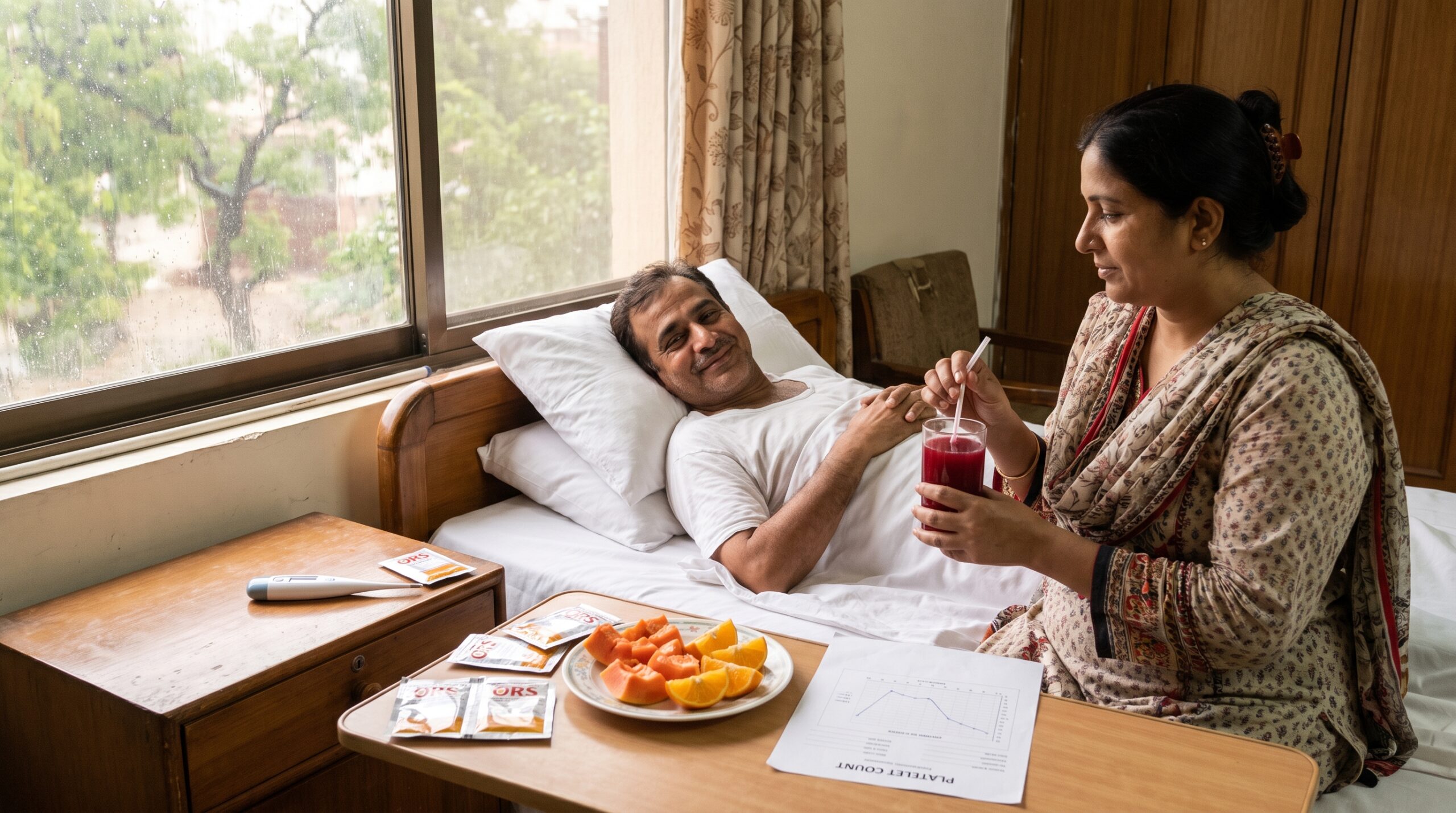
Introduction
Every year during Karachi’s monsoon season, thousands of families face the challenge of dengue fever. While mild cases can be managed at home, the fear of dropping platelet counts keeps everyone on edge.
I’ve seen families panic when their loved one’s platelet count falls below 100,000. The good news? With proper care, most dengue patients recover completely at home without hospitalization.
In this guide, I’ll walk you through everything you need to know about dengue recovery at home—from recognizing warning signs to natural ways of boosting platelet counts. Whether you’re caring for a child, an elderly parent, or yourself, this article will give you practical, doctor-approved advice.
Important: This guide is for mild to moderate dengue cases. Always consult your physician before making medical decisions.
1. What is Dengue Fever?
Dengue is a mosquito-borne viral infection transmitted by the Aedes aegypti mosquito. In Karachi, cases spike between July and November when stagnant water becomes breeding ground for these mosquitoes.
Common Symptoms:
- High fever (104°F or higher)
- Severe headache and pain behind the eyes
- Joint and muscle pain (break-bone fever)
- Nausea and vomiting
- Skin rash (appears 2-5 days after fever)
- Mild bleeding (nose, gums)
Three Phases of Dengue:
- Febrile Phase (Days 1-3): High fever, body aches
- Critical Phase (Days 4-6): Fever drops but this is the danger zone—platelet count falls
- Recovery Phase (Days 7-10): Gradual improvement
Most people recover in the third phase, but the critical phase requires close monitoring. This is when families often rush to hospitals, but with proper “home care services” and regular doctor visits, many patients can safely recover at home.
Learn more about dengue from WHO dengue guidelines
2. Warning Signs You Shouldn’t Ignore
While mild dengue can be managed at home, certain symptoms require immediate medical attention:
🚨 Emergency Signs:
- Severe abdominal pain or tenderness
- Persistent vomiting (can’t keep water down)
- Bleeding from nose, gums, or in vomit/stool
- Blood in urine
- Difficulty breathing or rapid breathing
- Extreme fatigue or restlessness
- Cold, clammy skin
- Platelet count below 20,000
When to Go to the Hospital:
I once consulted a family whose mother had dengue. On day 5, her platelet count was 45,000, and she felt weak but stable. They wanted to avoid the hospital due to costs. I advised them that while 45,000 is low, if she could drink fluids, wasn’t bleeding, and had no severe pain, home monitoring with daily doctor visits was possible.
We arranged for daily blood tests at home and doctor home visits. By day 8, her platelets started climbing. She recovered fully without hospitalization.
However, if she had shown any of the emergency signs above, hospital admission would have been non-negotiable.
Bottom Line: Trust your instincts. If something feels seriously wrong, don’t delay. Home care works for stable patients, not critical ones. For urgent situations, know how to handle medical emergencies at home
💡 Need Professional Dengue Monitoring at Home?
Elsa Home Nursing provides daily nurse visits, blood test coordination, and doctor consultations for dengue patients in Karachi.
📞 Call Now: 0300-9263225 | WhatsApp: 0300-9263225
3. When Hospital Admission is Necessary vs Home Care
This is the question every family asks: “Can we manage this at home?”
Home Care is Possible When:
Platelet count is above 20,000-30,000
✅ Patient can drink fluids regularly
✅ No signs of bleeding
✅ No severe abdominal pain
✅ Daily blood test monitoring is available
✅ Doctor is accessible for home visits or teleconsultation
Hospital Admission is Required When:
Platelet count below 20,000
❌ Signs of internal bleeding
❌ Severe dehydration (can’t retain fluids)
❌ Organ complications (liver, kidney issues)
❌ Dengue Hemorrhagic Fever (DHF) or Dengue Shock Syndrome (DSS)
Real Example from Karachi:
Last year, a patient’s family contacted Elsa Home Nursing when their 28-year-old son was diagnosed with dengue. His platelet count was 78,000 on day 3.
Our Approach:
- Daily home visits by our qualified nurse
- Complete blood count (CBC) test every 24 hours
- Monitored fluid intake (3-4 liters/day)
- Doctor teleconsultation twice daily
- Family trained to spot warning signs
His platelet count dropped to 52,000 on day 5 but stabilized. By day 8, it climbed to 85,000. He recovered at home, saving over Rs. 150,000 in hospital costs.
Key Takeaway: Home care works when there’s a proper support system—not just family care, but professional medical oversight. If you’re in Karachi and considering home care services vs hospital, make sure you have:
- Access to daily blood tests
- A doctor on call
- Trained nursing support if needed
For more information on dengue diagnosis and treatment, visit CDC dengue information
4. How to Monitor Platelet Count at Home
You can’t physically check platelets at home without a blood test, but you can monitor symptoms that indicate dropping counts.
Daily Monitoring Checklist:
Morning Routine:
- Check temperature (fever usually drops on day 3-4)
- Look for new rashes or red spots (petechiae)
- Check gums for bleeding while brushing
- Note energy levels
Throughout the Day:
- Count fluid intake (maintain log)
- Monitor urine output (should pass urine every 3-4 hours)
- Watch for nosebleeds or easy bruising
Blood Test Schedule:
- Day 1-2: Initial CBC to confirm dengue
- Day 3-6: Daily CBC (critical phase)
- Day 7 onwards: Every alternate day if improving
In Karachi, home blood test services like Chughtai Lab, IDC, and Dr. Essa Lab offer home sample collection for Rs. 800-1200. Keep all reports organized to track trends.
Pro Tip: Don’t panic if platelet count drops slowly. A gradual decrease with no bleeding is different from a sudden crash. Always discuss reports with your doctor.
5. Natural Ways to Increase Platelets
Let me be clear: There’s no magic food that instantly boosts platelets. Recovery takes time as your body fights the virus. However, certain foods support your body’s natural healing process.
🍃 Papaya Leaf Extract
This is probably the most talked-about remedy in Pakistan. While scientific evidence is limited, many doctors in Karachi recommend it based on clinical observations.
How to Use:
- Crush fresh papaya leaves
- Extract juice (2-3 tablespoons)
- Mix with water or honey
- Take twice daily during critical phase
I’ve seen families swear by this. One patient’s platelet count rose from 48,000 to 95,000 in three days while using papaya leaf juice alongside proper hydration. Coincidence? Maybe. Harmful? No.
🥤 Pomegranate Juice
Rich in iron and vitamins, pomegranate supports blood health.
- Drink fresh pomegranate juice (not packaged)
- 1-2 glasses daily
- Helps maintain energy levels
🥛 Milk (especially Buffalo Milk)
High in calcium and vitamin K, which play a role in blood clotting.
- Some families give warm milk with turmeric
- Not scientifically proven but traditionally used
🍊 Vitamin C Rich Foods
Supports immune function:
- Oranges, kiwi, guava
- Helps absorption of iron
- Boosts immunity
🥬 Folate-Rich Foods
Necessary for cell production:
- Spinach, broccoli
- Lentils (daal)
- Eggs
⚠️ What to Avoid:
- Aspirin or ibuprofen (increases bleeding risk—use paracetamol only)
- Alcohol
- Oily, spicy foods (hard on liver)
Important Reminder: These foods support recovery. They don’t replace medical treatment. If your doctor recommends platelet transfusion, don’t delay it hoping food will work.
6. Diet Plan for Dengue Patients
When you have dengue, your appetite disappears. But nutrition is crucial for recovery.
Sample Meal Plan:
Early Morning (7 AM):
- Papaya leaf juice (2 tbsp) mixed with honey
- Warm water
Breakfast (8-9 AM):
- Oatmeal porridge with banana
- OR Boiled egg with whole wheat toast
- Fresh orange juice
- Coconut water
Mid-Morning (11 AM):
- Pomegranate juice
- Light biscuits (if hungry)
Lunch (1-2 PM):
- Chicken soup (light, not spicy)
- White rice with boiled vegetables
- Yogurt (dahi)
- Plenty of water
Evening Snack (4-5 PM):
- Fresh fruit salad (papaya, watermelon, kiwi)
- Green tea or herbal tea
- Glucose water
Dinner (7-8 PM):
- Khichdi (rice and lentils—easy to digest)
- Steamed fish or chicken breast
- Vegetable soup
- Buttermilk (lassi)
Before Bed:
- Warm milk with a pinch of turmeric
- ORS solution (if needed)
Just like with bedridden patient diet plans, dengue patients need easily digestible, nutritious meals to support recovery.
💧 Hydration is King:
You need 3-4 liters of fluids daily during dengue:
- Plain water (most important)
- Coconut water (natural electrolytes)
- ORS (oral rehydration solution)
- Fresh fruit juices
- Soups and broths
Why So Much Fluid?
Dengue causes plasma leakage—fluid shifts from blood vessels into surrounding tissues. This is why patients feel dehydrated even while drinking water. Continuous fluid intake compensates for this loss.
Signs of Good Hydration:
✅ Passing clear/light yellow urine every 3-4 hours
✅ Moist lips
✅ Good skin elasticity (pinch test)
Signs of Dehydration:
❌ Dark yellow urine
❌ Dizziness when standing
❌ Dry mouth and lips
❌ Reduced urine output
If you can’t keep fluids down due to vomiting, this is an emergency. Hospital IV fluids may be necessary. If home IV treatment is needed, learn about proper IV cannula care at home.
🏥 Confused About Home Care vs Hospital?
Speak to our medical team for personalized dengue care assessment.
📱 Free Consultation: +92 300 9259632
7. Rest and Recovery Timeline
Dengue recovery isn’t just about platelet count—it’s about complete healing.
Typical Recovery Timeline:
Days 1-3 (Febrile Phase):
- High fever, body pain
- Complete bed rest required
- Fever comes down with paracetamol
- Stay hydrated
Days 4-6 (Critical Phase):
- Fever may drop (feels like improvement but it’s NOT)
- This is when platelets drop
- Most dangerous period
- Strict monitoring needed
- Continue complete rest
Days 7-10 (Recovery Phase):
- Platelets start climbing
- Energy slowly returns
- Appetite improves
- Can sit up, do light activities
Weeks 2-4 (Post-Dengue Recovery):
- Still feel weak (this is NORMAL)
- Fatigue continues for weeks
- Gradual return to normal activities
- Avoid heavy exercise
Real Talk About Post-Dengue Fatigue:
Many patients get frustrated: “My platelets are normal, why am I still so tired?”
Your body fought a major viral infection. It needs time to rebuild. I’ve seen patients rush back to work after 10 days and relapse into exhaustion.
Recovery Tips:
- Take 2-3 weeks off work if possible
- Short walks, not jogging
- Midday naps
- Continue nutritious diet
- Don’t lift heavy weights for a month
Listen to your body. Recovery can’t be rushed. This is similar to hospital discharge recovery where patience is key.
8. Preventing Dengue Hemorrhagic Fever
The nightmare scenario every family fears: dengue turning into Dengue Hemorrhagic Fever (DHF) or Dengue Shock Syndrome (DSS).
What Causes DHF?
It’s not fully understood, but risk factors include:
- Second dengue infection (dengue has 4 strains)
- Very young or very old patients
- Delayed medical care
- Severe dehydration
Warning Signs of DHF:
🚨 Severe abdominal pain
🚨 Persistent vomiting with blood
🚨 Bleeding gums, nose bleeds
🚨 Black tarry stools
🚨 Extreme weakness, confusion
🚨 Cold hands and feet with warm body
🚨 Rapid weak pulse
If ANY of these appear, rush to the hospital immediately. This is not a home care situation. Know when to call an ambulance vs doctor at home.
Prevention During Home Care:
- Never miss daily blood tests during critical phase
- Keep doctor informed of all changes
- Maintain strict fluid intake
- Watch for bleeding signs
- Don’t give aspirin or NSAIDs
- Keep hospital bag ready just in case
Most dengue cases don’t progress to DHF, but vigilance saves lives.
Read more about dengue complications at Mayo Clinic dengue guide
9. When to Call a Doctor Home
Home care doesn’t mean doing everything alone. Doctor oversight is essential.
When to Arrange Doctor Home Visit:
📞 Day 1: Initial diagnosis confirmation
📞 Day 3-4: When fever drops (critical phase begins)
📞 Daily during critical phase (if possible)
📞 Any time warning signs appear
Benefits of Doctor Home Visits:
- Avoids hospital infection risk
- Comfortable environment for patient
- Personalized care
- Family can ask questions freely
- Monitors vitals properly
In Karachi, services like Elsa Home Nursing provide doctor home visits specifically for dengue monitoring. A qualified physician examines the patient, reviews blood reports, and adjusts the care plan.
Cost: Usually Rs. 2,000-4,000 per visit, far cheaper than emergency room visits.
Understanding the difference between general physician vs specialist home visit can help you make the right choice.
10. FAQs About Dengue Recovery
Q1: Can dengue happen twice?
Yes. There are 4 dengue strains (DEN-1, DEN-2, DEN-3, DEN-4). You can get dengue up to 4 times. Second infections are often more severe.
Q2: How long does immunity last after dengue?
You get lifelong immunity to that specific strain, but can still catch other strains.
Q3: Can I take paracetamol for fever?
Yes, paracetamol (Panadol, Calpol) is safe. Never take aspirin, ibuprofen (Brufen), or diclofenac as they increase bleeding risk.
Q4: Is dengue contagious?
No. It only spreads through mosquito bites, not person-to-person contact.
Q5: Should I get admitted if platelets are 50,000?
Not necessarily. If you’re stable, hydrated, no bleeding, and under doctor supervision, home care is often possible.
Q6: How quickly do platelets recover?
Usually they start climbing by day 7-8. Full recovery to 150,000+ may take 2-3 weeks.
Q7: Can I prevent dengue with diet?
No food prevents dengue. Only mosquito control does. But good nutrition supports immunity.
Conclusion
Dengue is scary, but with proper care, most patients recover completely at home. The key is staying calm, staying hydrated, and staying vigilant.
Your Recovery Checklist:
✅ Daily blood tests during critical phase
✅ 3-4 liters of fluids daily
✅ Nutritious, easy-to-digest food
✅ Complete rest for 2-3 weeks
✅ Doctor oversight (home visits or teleconsultation)
✅ Watch for warning signs
✅ Don’t rush recovery
Remember, home care works best when you have a support system. If you’re in Karachi and need professional home nursing support during dengue recovery—whether it’s daily monitoring, blood tests at home, or doctor consultations—“Elsa Home Nursing is here to help”
We’ve supported hundreds of families through dengue recovery with compassionate, Aga Khan-level medical care in the comfort of home.
Learn more about what home nursing services include and how we can support your family.
✅ Get Expert Dengue Home Care Support
Complete dengue recovery packages starting from Rs. [Price]
✓ Daily nurse monitoring
✓ CBC test at home
✓ Doctor home visits
✓ 24/7 medical guidance👉 Book Now: https://elsahomenursingcare.com/
📞 Call: +92 300 9263225 | WhatsApp: +92 300 9263225
Need Help? Contact us for dengue home care packages.
Stay safe. Stay hydrated. You’ll get through this.